




p (1).png)




.png)




.png)

Review Article
To Help or to Heal? A Scoping Review of Complementary Therapeutic Touch for Chronic Pain and Anxiety
- Iqbal Akhtar Khan
Corresponding author: Iqbal Akhtar Khan, MBBS, DTM, FACTM, PhD, Independent Scholar, Lahore, Pakistan, ORCID—0000-0002-2363-9486
Volume: 2
Issue: 6
Article Information
Article Type : Review Article
Citation : Iqbal Akhtar Khan, Hamza Iltaf Malik, Mehnaz Liaqat Sheikh. To Help or to Heal? A Scoping Review of Complementary Therapeutic Touch for Chronic Pain and Anxiety. Journal of Medical and Clinical Case Reports 2(6). https://doi.org/10.61615/JMCCR/2025/DEC027141213
Copyright: © 2025 Iqbal Akhtar Khan. This is an open-access article distributed under the terms of the Creative Commons Attribution License, which permits unrestricted use, distribution, and reproduction in any medium, provided the original author and source are credited.
DOI: https://doi.org/10.61615/JMCCR/2025/DEC027141213
Publication History
Received Date
24 Nov ,2025
Accepted Date
09 Dec ,2025
Published Date
13 Dec ,2025
Abstract
Therapeutic Touch, the comforting touch of patients, is a non-pharmacologic interventional adjunctive tool with high patient acceptance. It falls under the categories of Complementary and Alternative Medicine (CAM) and is used by caregivers to reduce anxiety, accelerate relaxation, and decrease pain. This well-intentioned practice, born from a desire to provide holistic, compassionate care, can improve their subjective experience without any documented adverse events.
Despite its clinical use and perceived efficacy, the acceptance within mainstream medicine has been hindered by debates about its lack of measurable physiological mechanisms and standardized protocols. Clinicians are expected to view this healing modality as a tool for comfort and anxiety reduction, while advocating for future well-designed randomized controlled trials to figure out efficacy and mechanisms.
This review aims to provide a comprehensive overview of therapeutic touch, including a historical account of its development, proposed mechanisms of action, its application in managing the two widespread and commonly co-occurring symptoms: chronic pain and anxiety, the current state of scientific evidence, and the major controversies surrounding its practice.
Key Words: Therapeutic Touch, Complementary and Alternative Medicine, Energy Medicine, Chronic Pain, Anxiety.
Abbreviations
HRQoL: Health-related quality of life
NCCAM: National Center for Complementary and Alternative Medicine
CAM: Complementary and Alternative Medicine
DALYs: Disability adjusted Life Years
YLDs: Years lived with disability
IASP: International Association of the Study of Pain
APA: American Psychological Association
WHO: World Health Organization
TTIA: Therapeutic Touch International Association
NH-PAI: Nurse Healers Professional Associates International
QTTP: Qualified Therapeutic Touch Practitioner
QTTT: Qualified Therapeutic Touch Teacher
►To Help or to Heal? A Scoping Review of Complementary Therapeutic Touch for Chronic Pain and Anxiety
Iqbal Akhtar Khan1*, Hamza Iltaf Malik2, Mehnaz Liaqat Sheikh3
1MBBS, DTM, FACTM, PhD, Independent Scholar, Lahore, Pakistan, ORCID—0000-0002-2363-9486
2MBBS MRCGP (UK), 60-Caledonian Glascote, Tamworth B77 2ED, United Kingdom.
3DPT, Department of Physical Therapy, Hameed Latif Teaching Hospital, Lahore, Pakistan.
Introduction
“Chronic pain is not all about the body, and it is not all about the brain – it is everything, target everything. Take back your life.”— Prof. Sean Mackey - Division of Stanford Pain Medicine Therapeutic Touch, a form of energy medicine, is a non-invasive healing modality derived from the ancient practice of the “laying-on of hands” [1,2]. Its theoretical definition by Krieger is: “an intentionally directed process of energy exchange during which the practitioner uses the hands as a focus for facilitating the healing process” [3]. It is an intervention in which human energies are therapeutically manipulated, a practice conceptually supported by Rogers' theory of unitary human beings [4]. It aims to harmonize, replenish, and improve the flow of a human biofield energy by removing blockages of the person's “biofield” but involves no physical contact [5]. It falls under the categories of CAM.
Pain and anxiety, a pervasive clinical challenge, significantly impair HRQoL, prolong recovery periods, and increase healthcare costs, both direct and indirect. Whereas pain is one of the universals of existence [6], it is always a personal experience that is influenced to varying degrees by biological, psychological, and social factors [7]. The IASP, last updated August 13, 2025, defines it as: “an unpleasant sensory and emotional experience associated with, or resembling that associated with, actual or potential tissue damage” [7]. Chronic pain is defined as: “pain persisting for more than 3 months—can significantly impair quality of life and daily functioning, often leading to disability” [8]. The debate about whether “Chronic pain is a symptom or a disease?” has evolved over decades. To bring an end to it, the IASP Working Group, in cooperation with the WHO, developed a disease classification system [9] which was later endorsed by the International Classification of Diseases (ICD) to allocate the code 2026 ICD-10-CM Diagnosis Code G89.2 (effective 10/1/2025) to chronic pain [10].
As far as anxiety is concerned, it is defined by APA as: “an emotion characterized by apprehension and somatic symptoms of tension in which an individual anticipates impending danger, catastrophe, or misfortune” [11]. Anxiety, a normal emotion that everyone has preceding moments of performance or conflict, can trigger our fight or flight response to save us from a dangerous situation. However, when it persists or appears without a concrete rationale, it is considered a disorder [12].
Magnitude of the Problem
“Instead of worrying about what you cannot control, shift your energy to what you can create.” —— Roy Leslie Bennett (1957 – 2018) - Zimbabwean politician
Ronald Melzack (1929-2019), the pioneering Canadian psychologist revolutionizing the understanding and treatment of pain, inferred “Pain may be the warning signal that saves the lives of some people, but it destroys the lives of countless others” [13]. The psychosocial and functional consequences of chronic pain have been well documented as having significant effects on the experience of pain, presentation to health care providers, responsiveness to and participation in treatment, disability, and HRQoL [14]. Psychiatric comorbidities, especially depression and anxiety, are common, yet under-recognized, in patients with chronic pain and can significantly worsen outcomes. Chronic pain is also associated with an increased risk of suicidal ideation, highlighting the need for comprehensive, integrated care [8].
According to the Fact Sheet of WHO, 359 million people (including 72 million children and adolescents) were living with an anxiety disorder in 2021 [15]. Anxiety disorders are the second leading mental health-related cause of DALYs and YLDs worldwide [16].
Chronic Pain and Anxiety: Bidirectional Relationship
“Anxiety is a thin stream of fear trickling through the mind. If encouraged, it cuts a channel into which all other thoughts are drained.” — Arthur Somers Roche (1883-1935)—American Author
The association between anxiety disorders and pain may be stronger than the association between depression and pain. The relationship between chronic pain and anxiety is complex. Whereas pain is a message of danger that a part of the body has and is about to be pushed beyond capacity, anxiety is the fear of impending danger. Anxiety, in the course of chronic pain, can be both a cause and effect – hence the phrase “pain cycle” [12]. The relationship begins when one has pain, which in turn may cause anxiety. This was found in a cross-sectional study from Yazd, Iran, which showed that 68.8% of the study population (suffering from chronic pain) suffered from mild to severe anxiety, showing a significant positive relationship between the two [17].
While chronic pain can cause anxiety by its physical and emotional impact and heightened sensitivity, the anxiety can manifest as physical pain through muscle tension and other physical symptoms. Since this relationship is bidirectional, addressing both conditions simultaneously often becomes necessary for better outcomes. The practical example is augmenting the therapeutic touch with pain-relieving strategies of mainstream medicine. Although therapeutic touch can be used for both acute and chronic pain, more research has focused on chronic conditions like fibromyalgia and osteoarthritis [18].
Rationale
“We are usually convinced more easily by reasons we have found ourselves than by those which have occurred to others.” ― Blaise Pascal (1623-1662)-French Philosopher
The disease burden of pain and anxiety, and the resultant gravity of the situation, need meaningful intervention. While mainstream medicine (term used interchangeably with conventional medicine) is the cornerstone of management of pain and anxiety, it is often associated with adverse events, including dependency, sedation, and gastrointestinal issues. Consequently, there is a growing demand for effective CAM approaches.
When describing these approaches, people often use “alternative” and “complementary” interchangeably, but the two terms have different concepts:
- If a non-mainstream approach is used together with mainstream medicine, it is considered “complementary.”
- If a non-mainstream approach is used in place of mainstream medicine, it is considered “alternative.”
Whereas the NCCAM places therapeutic touch in the biofield energy category [19], it has gained wider acceptance as a non-invasive, nurse-led complementary therapy claimed to influence the human biofield to reduce pain and anxiety. The rationale for this review is to provide clinicians with an evidence-based perspective on the right application of therapeutic touch as a non-invasive, highly portable, supportive, complementary tool in patient care in various clinical settings, including hospice, oncology, and critical care. However, it must be made clear that therapeutic touch is complementary in all situations, which can never be an alternative to mainstream medicine.
Objectives
This review aims to provide a comprehensive overview of Therapeutic Touch, including a historical account of its development, proposed mechanisms of action, its application in managing two widespread and co-occurring symptoms: chronic pain and anxiety, the current state of scientific evidence, and the major controversies surrounding its practice.
Historical Context of Therapeutic Touch
“The mind needs to be reeducated to feel physical sensations, and the body needs to be helped to tolerate and enjoy the comforts of touch." —-Bessel van der Kolk (born 1943): American Psychiatrist
Whereas the power of touch has long been revered across cultures and healing traditions, the true origins of therapeutic touch should be sought 200 years earlier, in the discredited theories of Animal Magnetism propounded by the German physician Franz Anton Mesmer (1734-1815), the forerunner of modern practice of hypnotism [20]. Magnetic healers aimed to restore balance and wellness by channeling this energy, often through light touch, gentle stroking, or even hovering hands above the body. While not always involving direct physical contact, it is designed to promote relaxation, relieve pain, and restore the body’s natural energy flow.
The history of therapeutic touch usually begins with the colorful life of Dora Kunz (1904-1999), the clairvoyant woman who first observed that life was an interplay of subtle energies. Her story of the development of her own intuitive gifts is a fascinating one, and her later collaboration with Dr. Dolores Krieger (1921-2019), Professor of Nursing at New York University, to develop the technique now known as therapeutic touch is noteworthy [21]. The formal classes started in 1972 at Pumpkin Hollow Retreat Center in New York. Whereas it was developed as a modern therapy based on ancient healing practices like the “laying-on of hands”, the developers, however, systematized it into a teachable and repeatable process. The practice quickly gained recognition within the nursing community as a promising tool to incorporate holistic care into clinical practice. Described as energy healing, therapeutic touch aims to harmonize, replenish, and improve the flow of a human biofield energy by removing blockages of the person's “biofield” but involves no physical contact [5].
Application in Healthcare
“The management of pain is a complex and inexact science at best. The pain experience is a complex and often frustrating one. But there are no "magic bullets" in the treatment of pain” [22].
The therapeutic touch is applied to reduce pain, stress, and anxiety while promoting relaxation and a sense of comfort across various settings, including hospice and critical care, to support healing and improve well-being. Its role in geriatric care is to help older adults improve sleep quality, increase comfort, and enhance overall well-being. It is practiced in virtually all countries worldwide, reflecting a universal need for health and well-being, though the specific methods, prevalence, and cultural acceptance vary significantly.
The Process of Therapeutic Touch
“The practitioners claim to be able to detect and manipulate a client's biofield energy and bring that into better balance, using their hands to stimulate the body's natural ability to heal itself”— [23]
According to Krieger [24], the intent of the practitioner has a pivotal role in healing, and the touch could be most effective when a practitioner has “intent to help” and “genuine concern” for the patient [1].
The practice of therapeutic touch is often called non-contact therapeutic touch (NCTT) because the hands are typically held a few inches above the body to sense and manipulate the energetic field. The practitioner’s primary focus is to balance the patient’s energy field rather than physically touching the body [1]. However, some practitioners may, at times, use light touch, with permission, to guide energy.
Therapeutic touch involves a variety of specific processes intended to help and heal [25]. The typical session lasts for 15 to 30 minutes while the patient stays fully clothed, either sitting or lying down. The updated process, suggested by TTIA, consists of five main steps:
- Centering: Focusing and calming the practitioner’s mind.
- Assessing: Moving hands over the patient’s body in a rhythmic, symmetrical manner to notice the sensations like warmth, coolness, or tingling to identify areas of imbalance.
- Clearing/ Intervention: The practitioner using his/her hands to "unruffle" or clear any blockages or imbalances in the energy field of the patient, with sweeping motions.
- Directing/Balancing: The practitioner directs energy to the areas of imbalance to restore balance and harmony to the field.
- Evaluating and Closing: The practitioner re-evaluates the energy field with a final head-to-toe assessment to ensure its balance before closing the session with feedback and questions between the practitioner and the patient, evaluating the responses, and documenting the outcomes.
Research Critique
“You can’t stop the waves, but you can learn to surf.” – Prof.Jon Kabat-Zinn (born 1944)-Founder of Mindfulness-based Stress Reduction
- Studies in the General Population
In a systematic review, it was inferred that the use of therapeutic touch, as a non-invasive intervention and complementary therapy, can improve the health status of patients experiencing anxiety in various diseases such as cancer, heart diseases, stroke, hypertension, anxiety, and depression [19]. With more than 10 million patients with cancer in the United States, pain and symptom management are important topics for oncology nurses. The evidence using 12 research studies, examined by Jackson et al, indicates the effectiveness of therapeutic touch in relieving physical and psychological symptoms in oncology patients [26].
A prospective pretest–posttest, quasi-experimental, two-group design was used in the United States to address the research question proposed by Denison: “ Do people with Fibromyalgia Syndrome (FMS) experience decreased pain and improved HRQoL when therapeutic touch is added to their treatment plan compared with a group of persons with FMS who do not receive therapeutic touch ?” It was found that therapeutic touch significantly decreased the experience of pain in the intervention group (p < .05). Moreover, the participants also showed significant improvement in HRQoL over the course of the treatments [27].
A pretest-post-test randomized controlled trial was conducted in a university hospital in Austria to investigate the pain-relieving effect of therapeutic touch in adult neurologic patients with back pain. The control group received pain-relieving pharmacotherapy, while the intervention group received an additional four sessions on 4 consecutive days. The Quebec Back Pain Disability Scale and the Numeric Pain Rating Scale were used as outcome measures to evaluate activity domains affected by back pain and pain intensity. The long-term effect of therapeutic touch on pain improvement was significant [5].
The effects of therapeutic touch on tension headache pain in a group of college students, randomly divided into interventional and placebo groups, were investigated in a clinical trial. The McGill-Melzack Pain Questionnaire was used to measure headache pain levels before each intervention, immediately afterward, and 4 hours later. A Wilcoxon signed rank test for differences indicated that 90% of the subjects exposed to therapeutic touch experienced a sustained reduction in headache pain (p < .0001). An average 70% pain reduction was sustained over the 4 hours following therapeutic touch, which was twice the average pain reduction following the placebo. Using a Wilcoxon rank sum test, this was statistically significant (p< .01) [28].
A single-blinded randomized clinical trial was conducted in a university burn center in the United States to determine whether therapeutic touch versus sham could produce greater pain relief as an adjunct to narcotic analgesia and a greater reduction in anxiety. The patients receiving therapeutic touch reported significantly greater reduction in pain on the McGill Pain Questionnaire Pain Rating Index and Number of Words Chosen, and greater reduction in anxiety on the Visual Analogue Scale for Anxiety than did those who received sham. The study showed the efficacy of therapeutic touch as adjunct therapy on pain and anxiety. Of note, in burn centers, pain and anxiety are deeply interconnected, with acute pain and the trauma of injury often leading to chronic pain and long-term anxiety disorders [4]. In a between-subjects intervention study conducted in the US to investigate the effects of therapeutic touch on postoperative patients, it was found that those in the intervention groups had significantly lower levels of pain and lower cortisol levels [29].
- Studies in Vulnerable Population - Elderly
A pre-post test, single blind, randomized three-group design was used to compare the effectiveness of therapeutic touch to placebo and standard care procedures in reducing chronic pain and anxiety in an elderly population. Chronic musculoskeletal pain and anxiety in the intervention group were significantly reduced (p < 001 and p<.01, respectively) when compared with the control groups [1].
A randomized clinical trial was conducted in an acute care hospital unit in the United States on an elderly population to investigate the effects of therapeutic touch on post-surgical pain using a three-group experimental pre-test–post-test design. Whereas the experimental group received the therapeutic intervention, the control group received routine care, and the placebo group received the sound of a metronome set at a steady, slow pace. Objective measures included the Memorial Pain Scale, the Tellegen Absorption Scale, the Health Attribution Scale, and measures of pulse rate and pupil size, which were performed as repeated measures. In the experimental group, 73% demonstrated a statistically significant decrease in pain intensity scores from pre-test to post-test (p < 0.01) [30].
A quasi-experimental randomized control study was conducted to investigate the impact of therapeutic touch on the comfort and anxiety of 60 older people (divided equally into experimental and control groups) living in a nursing home in İzmir, Turkey. In the experimental group, there was a statistically significant reduction in anxiety level and improvement in comfort level (< 0.05) [31].
In a randomized clinical trial aimed to investigate the effects of therapeutic touch on post-surgical pain in a United States hospital on an elderly population, 90 participants were randomly assigned to three groups (experimental, control, and placebo) using a three-group experimental pre-test-post-test design. In the experimental group, 73% showed a statistically significant decrease in pain intensity scores from pre-test to post-test (p < 0.01) [30].
Professional Oversight
“Professional is not a label you give yourself – it is a description you hope others will apply to you.” – David Maister- Leading authority on Professionalism
The mechanisms, grouped under the rubric of oversight processes, include accreditation, licensure, and certification. Accreditation serves as a leverage point for the inclusion of particular educational content in academic and continuing education curricula. Licensure and certification can serve as a lever for ensuring that practicing health professionals meet specific standards and continue to maintain competence in each content area [32]. Whereas there is no government or state-mandated licensing authority in the case of therapeutic touch, professional oversight is primarily managed through voluntary professional associations that provide certification, set standards of practice, and enforce a code of ethics.
The main body is TTIA, through its credentialing arm, NH-PAI. The TTIA was founded in the United States in 1977 with the main aim to lead, inspire, and advance the therapeutic touch. It establishes the standards of practice, a scope of practice, and a code of ethics to which its members and certified practitioners must adhere. The TTIA offers a credentialing process to become a QTTP and/or a QTTT.
Controversies in the Practice of Therapeutic Touch
“Lack of evidence for something does not automatically prove that it does not exist,”---- A fundamental principle in logic, philosophy of science, and critical thinking.
Although therapeutic touch is a non-invasive intervention with no serious safety concerns or contraindications, officially on record, when used as a complementary therapy, it is subject to constant debate. The inconsistent scientific evidence of the quality of existing research due to small sample sizes, lack of standardized procedures, and short treatment times is the issues that hinder the acceptance on a wider scale [33]. Whereas the theoretical basis for therapeutic touch involves "subtle energy" fields, which are not recognized by mainstream medicine and, therefore, not measurable by the available standard scientific instruments.
To mitigate any ethical issues, the practitioners should always seek informed consent, be aware of a patient’s personal history and preferences, and properly maintain professional boundaries. Of note, therapeutic touch should always be used alongside, not in place of, mainstream medical advice.
Poetic and Spiritual Perspectives
Therapeutic touch is a powerful and well-documented healing practice, with quotes reflecting its power ranging from poetic observations to scientific insights. The tables below organize these quotes thematically for potential readers.
Adding a poetic and spiritual perspective, the renowned Urdu poet Parveen Shakir beautifully captured the essence of healing through touch:
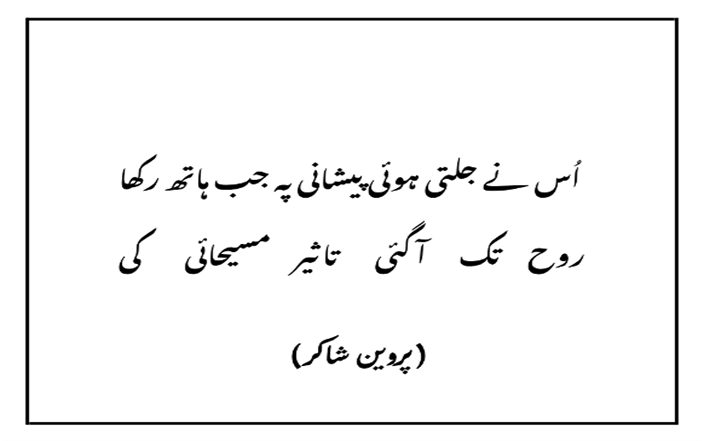
“Us ne jalti hui peshani pe jab haath rakha
Rooh tak aa gayi taseer-e-Maseehai ki”
“When his hand touched my fevered brow, the grace of a healer’s touch flowed to my soul”. (Translation by Maryam Ali Khan)
This verse illustrates not only the emotional resonance of healing touch but also its potential to reach deep into the human spirit—an intangible yet profound dimension of therapeutic care.
While "Therapeutic Touch" is a modern scientific term, its essence is deeply rooted in the concepts of healing, solace, and the transfer of positive energy, which are fertile ground for Urdu poetry.
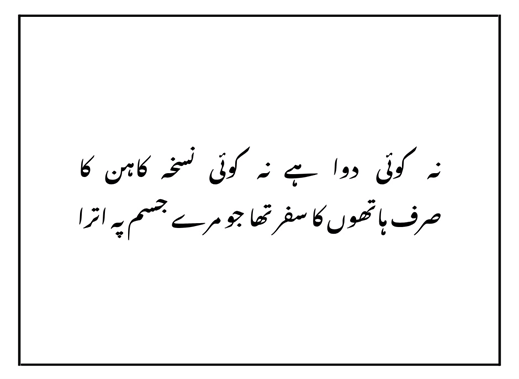
“Na koi dawa hai na koi nuskha kahin ka
Sirf haathon ka safar tha jo mere jism pe utra”
“It is not a medicine, nor a healer's prescription.
It was just the journey of hands that descended upon my body”.
(Translated by Maryam Ali Khan)
Discussion
“The rise of complementary and alternative medicine reflects the continued effort on the part of hospitals and caregivers to broaden the vital services they provide to patients and communities.”——Nancy Foster, Vice President for Quality and Patient Safety at the American Hospital Association [34]
According to a survey of the American Hospital Association, 85 percent of responding hospitals indicated patient demand as the primary rationale in offering CAM services, and 70 percent of survey respondents stated clinical effectiveness as their top reason. Furthermore, the survey results reinforced the fact that patients wanted the best that both conventional and alternative medicine can offer, and the hospitals are responding [34]. The survey report continues that the hospitals have long known that what they do to treat and heal involves more than just medications and procedures. It is about using all of the art and science of medicine to restore the patient as fully as possible. [34]. Therapeutic Touch, an interventional adjunctive tool, remains a frequently utilized and generally well-received non-pharmacologic approach with high patient acceptance, on many spots on the globe. Current evidence supports its use primarily for the complementary management of mild to moderate anxiety and related stress reduction.
Despite its clinical use and perceived efficacy, acceptance within mainstream medicine has been hindered by debates about its lack of measurable physiological mechanisms and standardized protocols. Clinicians are expected to view therapeutic touch as a tool for comfort and anxiety reduction, while advocating for continued, high-quality research. It may activate placebo responses or enhance relaxation through psychological mechanisms, even if the energy field concept is not scientifically validated.
Future well-designed randomized controlled trials are needed to determine efficacy, mechanisms, and potential role in managing two of the most common clinical symptoms: pain and anxiety, to fully elucidate its efficacy and mechanism of action.
Conclusion
“Today’s patients have better access to health information and are demanding more personalized care.— Sita Ananth, Director of Knowledge Services for Samueli Institute [34]
Whereas the debate over the underlying mechanism of therapeutic touch persists and the critics argue that any observed benefits are solely attributable to the powerful placebo response, a dilemma is created for caregivers. Should an intervention that provides comfort and may reduce pain and anxiety through placebo mechanisms be endorsed, even if its purported mechanism is false? From a strict evidence-based perspective, the answer is “No”. However, the clinical reality is that it provides a simple, accessible way for caregivers to interact non-invasively with patients, offering comfort, reducing distress, and supporting the body's natural capacity to relax and heal. Should we deny access to our patients to a well-intentioned practice born from a desire to provide holistic, compassionate care, which can improve their subjective experience without any documented adverse events? Of note, complementary physical activity has been employed with mainstream medicine in the management of type 2 diabetes mellitus [35] and restless legs syndrome [36], with rewarding outcomes. Why not opt for a benign healing method for managing two widespread and co-occurring symptoms: chronic pain and anxiety? The fitting closing sentence would be a quote from Barb MacIntyre -“The use of complementary therapies in conjunction with conventional care has great potential to address patient pain, complication rates, and recovery time” [37].
Authors’ Contribution
All the authors made substantial contributions to the conception and design of the study, acquisition of data, analysis and interpretation of data, drafting the article, revising it critically for important intellectual content, and final approval of the version to be submitted.
Ethical Considerations
The authors declare that the conducted research is not related to either human or animal use.
Funding Statement
The authors declare that they did not receive any financial support from any quarter for the research, authorship, and/or publication of this paper.
Duality of Interest
All the authors declare that there is no duality of interest related to the present study.
Acknowledgement
The authors are highly grateful to Dr. Murad Ahmad Khan for his input throughout the conduct of the study to improve the quality of the manuscript.
- Lin Yu-Shen,Taylor AG. (1998). Effects of Therapeutic Touch in Reducing Pain and Anxiety in an Elderly Population-Integrative Medicine. 1(4): 155-162.
- Macrae J. (2010). Therapeutic Touch: A Practical Guide— Knopf Doubleday Publishing Group.
- Krieger, D, Peper, E, Ancoli, S. (1979). Therapeutic Touch: Searching for Evidence of Physiological Change. Am J Nursing. 79(4): 660–665.
- Turner JG, Clark AJ, Gauthier DK, Williams M. (1998). The effect of therapeutic touch on pain and anxiety in burn patients. J Adv Nurs. 28(1): 10-20.
- Mueller G, Palli C, Schumacher P. (2019). The effect of Therapeutic Touch on Back Pain in Adults on a Neurological Unit: An Experimental Pilot Study— Pain Manage Nursing. 20(1): 75-81.
- Khan MA, Fauzia R, Khan IA. (2015). Pain: History, Culture, and Philosophy - Acta Medico-Historica Adriatica. 13(1): 113-130.
- IASP. (2025). Revised Definition of Pain.
- Stretanski MF, Kopitnik NL, Matha A, Conermann T. (2025). Chronic Pain.
- Perrot S, Cohen M, Barke A, Korwisi B, Rief W, Treede RD; IASP. (2019). Taskforce for the Classification of Chronic Pain. The IASP classification of chronic pain for ICD-11: chronic secondary musculoskeletal pain. Pain. 160(1): 77-82.
- ICD - Chronic Pain. (2026). ICD-10-CM Diagnosis Code G.89.2.
- American Psychological Association. (2025). Anxiety.
- Center for Pain Medicine. (2025). The Relationship Between Chronic Pain and Anxiety.
- Melzack R. (2001). Pain and the Neuromatrix in the Brain—J Dental Edu. 65(12): 1378-1382.
- Turk DC, Fillingim RB, Ohrbach R, Patel KV. (2016). Assessment of Psychosocial and Functional Impact of Chronic Pain. J Pain. 17(9): 21-49.
- WHO. (2025). Mental disorders; Anxiety Disorders.
- Xiong P, Liu M, Liu B, Hall BJ. (2022). Trends in the incidence and DALYs of anxiety disorders at the global, regional, and national levels: Estimates from the Global Burden of Disease Study 2019. J Affect Disord. 15(297): 83-93.Bottom of Form
- Heidari, G. A, Tavafian SS. (2016). The Relationship between Anxiety and Chronic Pain: A Cross- Sectional Study from Yazd, Iran. IJMPP. 1(2): 87-92.
- Robinson J, Biley FC,Dolk H. (2007). Therapeutic touch for anxiety disorders Cochrane Database Syst Rev. 2007(3): CD006240.
- Maksum, Sujianto U, Johan A. (2019). Effects of Therapeutic Touch to Reduce Anxiety As a Complementary Therapy: A Systematic Review. 162: 162–175.
- Leskowitz E. (2003). Controversies in Therapeutic Touch—Seminars in Integ Med. 1(2): 80-89.
- Wager S. (1996). A Doctor’s Guide to Therapeutic Touch: Enhancing the Body’s Energy to Promote Healing -Perigee Books,NewYork.
- Wright SM (1987). The use of therapeutic touch in the management of pain. Nurs Clin North Am. 22(3): 705-714.
- O'Mathúna DP. (2016). Therapeutic touch for healing acute wounds. Cochrane Database Syst Rev. 23(8): CD002766.
- Krieger D. (1976). Healing by the “laying on” of hands as a facili- tator of bioenergetic change: The response of in-vivo human hemoglobin. Psychoenergetic Systems. 1(2): 121-129.
- Sayre-Adams J, Wright SG. (2001). Therapeutic Touch: Theory and Practice-Edition 2nd,Churchill Livingstone.
- Jackson E, Kelley M, McNeil P, Meyer E, Schlegel L, Eaton M. (2008). Does therapeutic touch help reduce pain and anxiety in patients with cancer? Clin J Oncol Nurs. 12(1): 113-120.
- Denison B. (2004). Touch the pain away: new research on therapeutic touch and persons with fibromyalgia syndrome. Holist Nurs Pract. 18(3): 142-151.
- Keller E, Bzdek VM. (1986). Effects of therapeutic touch on tension headache pain. Nurs Res. 35(2): 101-106.
- Coakley AB, Duffy ME. (2010). The effect of therapeutic touch on postoperative patients. J Holist Nurs. 28(3): 193-200.
- McCormack GL. (2009). Using non-contact therapeutic touch to manage post-surgical pain in the elderly. Occup Ther Int. 16(1): 44-56.
- Alp FY, Yucel SC. (2021). The Effect of Therapeutic Touch on the Comfort and Anxiety of Nursing Home Residents. J Relig Health. 60(3): 2037-2050.
- National Library of Medicine. (2025). Health Professions Education: A Bridge to Quality - NCBI Bookshelf.
- Garrett B, Riou M. (2021). A rapid evidence assessment of recent therapeutic touch research- Nurs Open. 8(5): 2318–2330.
- AHA. (2025). American Hospital Association-More Hospitals Offering Complementary and Alternative Medicine Services.
- Khan IA, Khan M, Raza F, Sheikh ML. (2025). Enhancing Management of Restless Legs Syndrome through Complementary Physical Therapy: Toward Better Outcomes in a DistressingSensorimotor Disorder. Mathews J Neurol. 9(1): 33.
- Khan IA, Siddiqui MH, Sheikh ML. (2025). Physical Activity: An Under-utilized Tool in Managing Type 2 Diabetes in Older Adults: A Narrative Review. Mathews J Diabetes Obes. 8(1): 22.
- MacIntyre B, Hamilton J, Fricke T, Ma W, Mehle S, Michel M. (2008). The efficacy of healing touch in coronary artery bypass surgery recovery: a randomized clinical trial. Altern Ther Health Med. 14(4): 24-32.
Download Provisional PDF Here
PDF