




p (1).png)



.png)




.png)

Research Article
Quantum Tunnelling, Nanoparticles, and Quantum Medicine —“Neem Extract” as Green Quantum Medicine for Sudden Sugar surge in type 2 Diabetes Mellitus (T2DM): A Possibility
- Ramen Kumar Parui
Corresponding author: Ramen Kumar Parui, ARC, Room No. F101, Block-F, Mall Enclave, 13, K. B. Sarani, Kolkata – 700080, India.
Volume: 3
Issue: 1
Article Information
Article Type : Research Article
Citation : Ramen Kumar Parui. Quantum Tunnelling, Nanoparticles, and Quantum Medicine -“Neem Extract” as Green Quantum Medicine for Sudden Sugar surge in type 2 Diabetes Mellitus (T2DM): A Possibility. Journal of Medical and Clinical Case Reports 3(1). 10.61615/JMCCR/2026/JAN027140110
Copyright: © 2026 Ramen Kumar Parui. This is an open-access article distributed under the terms of the Creative Commons Attribution License, which permits unrestricted use, distribution, and reproduction in any medium, provided the original author and source are credited.
DOI: 10.61615/JMCCR/2026/JAN027140110
Publication History
Received Date
20 Dec ,2025
Accepted Date
31 Dec ,2025
Published Date
10 Jan ,2026
Abstract
In the Quantum Year 2025, the importance of the quantum tunneling discovery has been remembered through this article. Although the influence of quantum tunneling spreads across almost all fields of science, its effect as quantum medicine in the safeguard of human life, particularly type 2 Diabetes Mellitus (T2DM), has been discussed. Nanotechnology offers scientists the ability to describe the manipulation of matter on an atomic, molecular, and nano-level scale, where unique quantum mechanical effects take place, i.e., reduction of at least one dimension at the nanoscale particles can be useful in the field of health care and medicine, particularly in diabetic treatment. At present, diabetes has turned into a chronic disease, and day by day, healthcare expenses are increasing more and more. Neem synthesis nanoparticles from herbs and plants turn into a substitute medicine that is less cost effective compare to chemical medicine. Natural environment, which can be considered as an open mine of herbs and plants like aloe vera, neem, tulsi, turmeric, etc., that are easily available. These have potential for treating as green synthesis materials which are capable of providing gold (Au), silver (Ag), and other nanoparticles. Fresh neem leaf extract (i.e., neem extract) exhibit magical role for quick support during sudden sugar spikes in the human bloodstream. “Neem extract” shows promise for T2DM by potentially improving insulin sensitivity during glucose uptake as well as lowering blood sugar. The realistic scenario is —“neem juice/extract” has special characteristic like (a) increase in glucose uptake which can help the cells for taking more amount glucose, (b) anti-inflammatory property that acts as an anti-diabetic, (c) quick support during sugar spikes and (d) promising potential that can be used in clinical trials for blood sugar management for diabetes.
Keywords: Diabetes, nanoparticles, quantum tunneling, neem extract
►Quantum Tunnelling, Nanoparticles, and Quantum Medicine —“Neem Extract” as Green Quantum Medicine for Sudden Sugar surge in type 2 Diabetes Mellitus (T2DM): A Possibility
Ramen Kumar Parui1*
1ARC, Room No-F101, Block-F, Mall Enclave, 13, K. B. Sarani, Kolkata – 700080, India.
Introduction
Discovery of Diabetes
Ancient peoples in China and Egypt thought that diabetes are cosmic origin [1-3]. It was a very natural way to think about diabetes as God-given or of cosmic origin. But in 1921, two Canadian researchers, Frederick Grant Banting and Charles Herbert Best [4], successfully extracted insulin from a healthy dog and observed revolutionary effects of diabetes during their experiment. They then injected it into dogs who had diabetes and found improvement in their conditions. This breakthrough was the first scientific experiment which clearly indicated that diabetes mainly arises due to “ non-availability of insulin” (produced by the pancreas) in sufficient amounts, i.e., less amount than that required daily by humanbody for a healthy life. On 11th January 1920, the insulin was applied to a 14-year-old boy, named Leonard Thompson, at Toronto General Hospital, and observations were successful as the first application of insulin in humanbody.
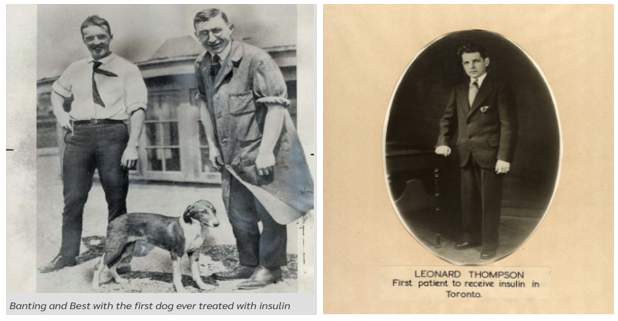
Figure 1: The photograph shows (left) the dog which was used in their experiment, and (right) 14years old Canadian teenager, Leonard Thompson, to whom the insulin was applied on 11 January 1920 at Toronto General Hospital ( Courtesy and Credit: UMass Diabetes Center of Excellence)
At present, diabetes has become a common disease suffered by humans in their daily lives. Global survey indicates that millions of individuals across the world are affected by this chronic disease. In fact, due to long-term hyperglycemia, it will damage the various tissues and organs of the human body and may lead to different complications such as
- Acute metabolic disorder associated with long-term complications;
- Significant impact on the patient
- Possible chronic disorders like diabetic retinopathy, diabetic cardiomyopathy, peripheral neuropathy, diabetic foot, segmental bone injury, and other complications.
Note that: it has been found that diabetes complications are irreversible and need long-term treatment. “
Discovery of Quantum Tunneling
In 1926, Professor Erwin Schrodinger [5] first theoretically suggested a mathematical framework that hints at the possibility of quantum tunneling based on wave-particle duality. In 1927, Friedrich Hund described the shape of a double-well potential through which tunneling is possible, in particular showing a finite probability for electrons to tunnel through a surface barrier in the case of electron emission from metals. In 1928, Leonid Mandelstam [6] and Mikhail Leontovich [7] independently discovered and published their observed results on quantum tunneling in field emission, demonstrating the tunneling phenomenon experimentally.
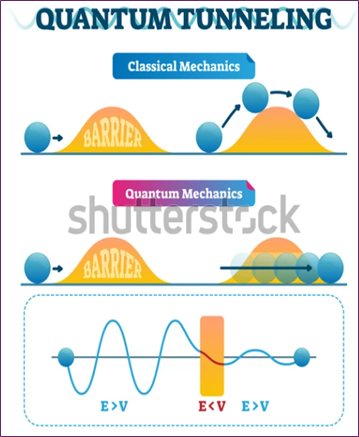
Figure 2: Visualization of quantum tunneling through a barrier (www.shutterstock.com)
Thus, quantum tunneling is a phenomenon in which a particle is capable of passing through an energy barrier, such that, according to classical physics, it is not possible to overcome. In a classical physics scenario, a particle with energy lower than a barrier’s potential energy can not pass through the barrier. But in quantum mechanics, the probabilistic interpretation of the wave function shows an effect in the wave function of a particle extends its capability beyond its classical boundaries, such that there is a non-zero probability of finding that particle on the other side of the barrier. This quantum tunneling phenomenon plays an important role across almost all fields of science (Figure 3), including physics, chemistry, biology, and pharmacology.
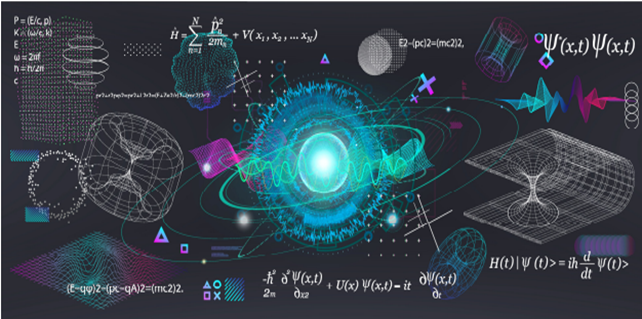
Figure 3: Represents a stylized visualization of quantum mechanics concepts featuring various mathematical equations, geometric representations, and wave-like patterns. (On the left side) Several fundamental relationships are listed (such as momentum to energy, classical momentum, etc). (Center) Hamiltonian operator representing the total energy (kinetic and potential energies) of a system. (On the right side) several wavefunction representing the probability amplitudes (for details, see the text of Niazi et al [8] and adopted from the same ref).
Nanoparticle and Nanotechnology
The prefix “Nano” comes from the Greek word meaning something very, very small, which is depicted as one thousand millionth of a meter i.e, 10 – 9 m. “Nano-technology” is a general term used for designing and making anything applicable, depending on the specific structure at the nano-scale, ranging from (1 to 100) nm. The term “Nano-materials” means the considered materials with at least one external dimension that covers the measuring angle 100 nm or less. As they are very, very small in size, the nano materials may be:
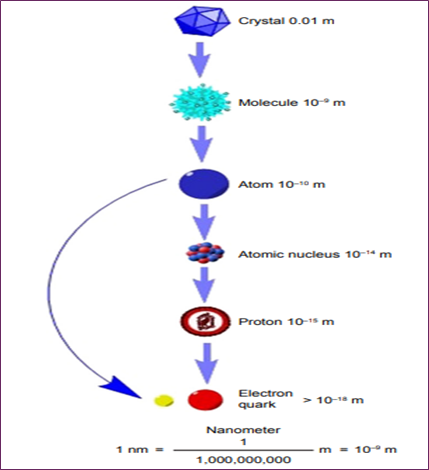
Figure 4: Shows the size of nano-particle as viewed in the measuring scale.
(a) in the form of particles, tubes, rods, or fibres, (b) the bulk form of the same composition may
have different physicochemical potentials [9,10], and (c) may behave differently when they enter the human body, particularly in the blood cells [11].
Relevance of Quantum Tunneling and Nano-particles in Biological Systems and Medicine
Quantum tunneling (QT) is a phenomenon where particles pass through energy barriers that would be classically insurmountable. In biology and medicine, this is relevant in several contexts. For example:
- Enzyme Function and Drug-Receptor Interactions — The QT plays a crucial role in many enzymatic reactions, especially those involving hydrogen transfer, allowing reactions to proceed faster than classical physics predicts. Understanding this effect helps in designing more effective drugs and enzyme inhibitors (Figure 5)
- Cellular Communication — Some investigation suggests QT may be involved in the rapid movement of ions through cell membrane channels, which could explain the efficient synchronization of ion waves across and between cells (Figure 5).
- Nanomedicine and Tunneling Nanotubes (TNTs) — studies in the case of tunneling nanotubes associated with biological phenomena suggest that tiny membrane channels allow the process of direct transfer of materials, including nanoparticles and nano-medicines, between cells. In the case when not a direct “quantum tunnel,” then the “biological tunneling mechanism is useful for better control of drug distribution within tissues.
- Disgnostics — used for quantum imaging for highly sensitive detection
- Targeted delivery — can be used for precision drug delivery
- Therapeutic Design — Designing novel drugs that leverage or block quantum tunneling.
- Life Energy — Some scientists believed that the life energy concept is a complex one and that can be seen as the energy that binds together the atoms and molecules which make up living organisms, implying that this energy would be responsible for complex interactions at the molecular level in such a manner that finally allows living things to grow, reproduce, and respond their environment.
- Linking together — It has been proposed that life energy could be seen as a form of simple phenomenon in which two particles are linked together in such a way that they share the same fate even though they are separated by a great distance. This idea could explain how living organisms are able to maintain their coherence and functions even though they are made up of trillions of individual cells in the human body.
This means that a connection exists between “quantum tunnel” and “nano-particles” in medicine, which follow quantum mechanical principles for advanced nanoparticle design and for exploring the role of quantum phenomenon, i.e., tunneling, towards understanding the scenario of the fundamental biological processes useful for preparation of nanomedicine.
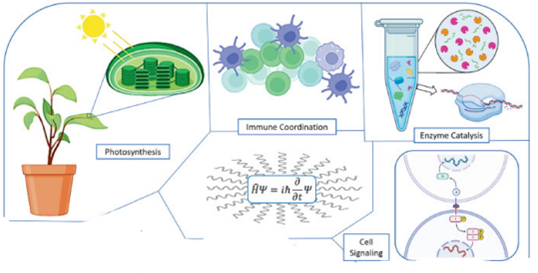
Figure 5: shows examples that are associated with quantum tunneling ( Courtesy: Shutterstock.com)
Pancreas and Insulin in the Human Body
The pancreas is a gland, about six inches long, located in the abdomen (figure 6A). It is shaped like a flat pear and is surrounded by the stomach, small intestine, liver, spleen, and gallbladder (figure 6B). The wide end of the pancreas on the right side of the body is called the head. The middle sections are the neck and body. The thin end of the pancreas on the left side of the body is called the tail (figure 6C). The uncinate process is the part of the gland that bends backward and underneath the head of the pancreas. Three major blood vessels cross behind the pancreas: the superior mesenteric artery, the superior mesenteric vein, and the portal vein. The pancreas is both an exocrine gland and an endocrine gland and has two main functions: (i) digestion and (ii) blood sugar regulation. Thus, the pancreas is such an organ that can be considered as a “Trusted Source” to produce digestive enzymes by sitting within the abdomen behind the stomach. Not only that, but this organ also produces “insulin,” which is a hormone that helps to regulate blood glucose levels. It is to be noted that the cells that produce insulin are known as “Beta Cells,” which are located in the islets of Langerhans, a set of structures within the pancreas.
Synchronization between Pancreas and Insulin, and Diabetes
The pancreas in the human body is a complex gland with a dual role : (a) in one role, it is active towards digestion and metabolism through the secretion of digestive enzymes associated with the exocrine portion for breaking down food, while (b) in another role, it secretes hormones i.e., insulin and glucagon to control sugar levels from the endocrine portion. That is, the endocrine pancreas produces insulin in the human body [12]. In fact, insulin and glucagon hormones work together to regulate the level of sugar (i.e., glucose) in the body to keep our body healthy.
Basic functions of the pancreas at high and low sugar levels
As it produces these two hormones, the pancreas plays a significant role as a switch “ON” and “OFF” methods depending on the level of high and low situations.
● when the glucose level in bloodstream goes up : (1) pancreas first detects this rise → (2) the pancreas pumps out insulin from the blood → (3) insulin helps by sending signal to muscles and other cells to uptake the pumpouted glucose → (4) this causes glucose level in bloodstream to fall down till it reaches normal point → (5) pancreas switches off insulin production as soon as detect the normal limit
● when the glucose level in bloodstream goes down : (1) pancreas first detects this drop → (2) pancreas switches on to increase the output of glucagon into the bloodstream → (3) glucagon sends signal to liver to breakdown glycogen (the stored form of glucose) into glucose → (4) liver stars to release more glucose into the bloodstream → (5) pancreas detects this rise in bloodstream, and switches off glucagon release as soon as blood glucose level reaches its normal set point.
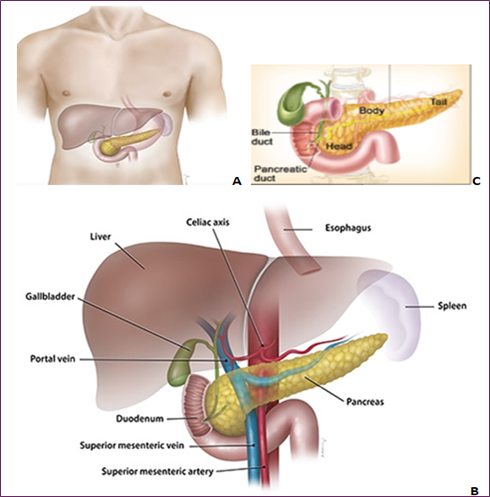
Figure 6 shows the position of the pancreas in the human body and its associated parts. (Courtesy & Copyright: Columbia University 2016)
If there is insufficient insulin in the body, cells can no longer take up glucose from the blood. As a result, levels of glucose in the blood rise. A doctor may refer to this as having high blood glucose, or hyperglycemia. Hyperglycemia is responsible for most of the symptoms and complications of diabetes. So, ● (a) Type 1 diabetes occurs when the body does not produce insulin, while ●(b) type 2 diabetes occurs when the body does not make or use insulin effectively.
Complications and Management of Diabetes
In diabetes, the realistic scenario is that the body either does not produce enough insulin or produces insulin, but it does not use it effectively. A survey of around 200 million people with type 2 diabetes hints that

Figure 7: Representation of involved mechanisms associated with the pharmaceutical management of Type-2 Diabetes (T2D) and its progression. Note that —Meglitinides and sulfonylureas, metformin and thiazolidinedione, α-glucosidase inhibitors, DPP-4 inhibitors, sodium glucose transporter (SGLT) inhibitors, and GLP-1 receptor agonists are some pharmacological therapies involved in the treatment of type-2 diabetes. Each of these medications acts on a specific site in the insulin resistance mechanism in type-2 diabetes. (for details, see the text of ref. Yousaf et al 2025 [13] and figure adopted from the same ref. Courtesy & Copyright: ACS, OMEGA 2025)
- The first line of treatment is the use of the synthetic drug “metformin” [14].
- Use of metmorfin exerts regulatory effects on the immune system, gut microbiota, and intestinal tract [15].
- while use of glibenclamide and chlorpropamide on one side reduces the probability of microangiopathic complications, and in other side improves the insulin sensitivity, along with its inability to stop the gradual loss of glycemic control and β-cell failure [14].
- In this context, sulfonylureas have shown their capability to promote β-cell death as observed in multiple investigations [15]. For example, the number of apoptotic β-cells increased by a factor of 1.5 at greater doses of nateglinide, while at lower concentrations no promotion of β-cell apoptosis.
- Use of alpha-glucosidase inhibitors for diabetes treatment exhibits a slowdown behavior regarding the digestion of carbohydrates through alpha-glucosidase enzymes.
- In order to prevent hyperglycemia, another antidiabetic drug, i.e., metformin, is used, but it lowers the insulin receptors (IRs-1) for production but increases (i.e., high) insulin levels.
- Latest therapies such as incretin mimetics/analogs and dipeptidylpeptidase-4 (DPP4), sodium glucose cotransporters inhibitors 2 (SGLT2) all produce side-effects in the diabetic treatments.
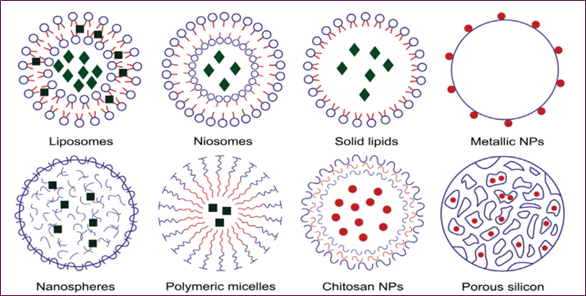
Figure 8: Schematic diagram showing different nanocarriers that are used for the delivery of anti-diabetic drugs.
- Liposomes are small spherical vesicles created from cholesterol and non-toxic phospholipids.
- Niosomes are multilamellar vesicular structures of non-ionic surfactants.
- Solid lipids are made of solid lipids or lipid blends.
- Metallic NPs are nanosized metals that can easily conjugate with various biological agents.
- Nanospheres are matricial nanostructures of spherical shapes (usually polymeric).
- Polymeric micelles are core/shell structures formed by amphiphilic block copolymers.
- Chitosan NPs are NPs formed by the incorporation of a polyanion (e.g., such as tripolyphosphate) with chitosan.
- Porous silicon NPs are hollow NPs made of porous silicon (adopted from ref. Simos et al. 2021 [16]).
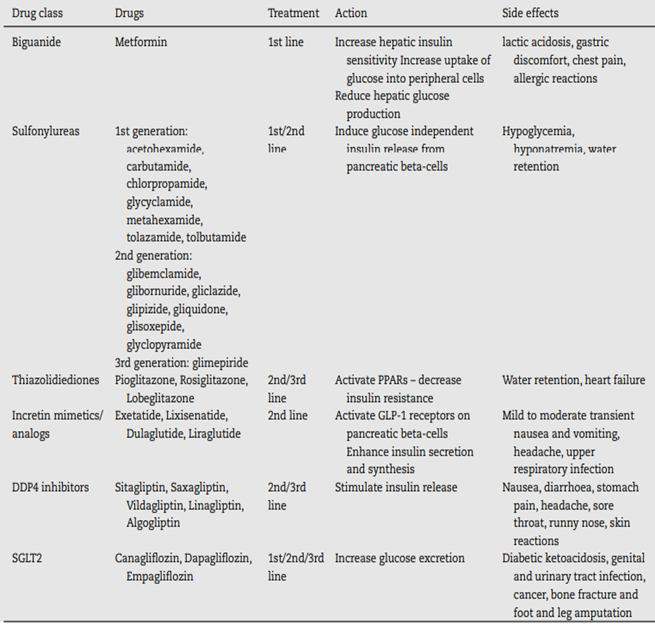
Table 1 represents various side effects produced at different body parts during antidiabetic treatment for T2DM. Nanotechnology has made a breakthrough in T2DM treatment in the field of medicine, i.e., in the form of nanomedicine.
Nanomedicine in the Treatment of Diabetes
Diabetes Mellitus simply classified into two — type 1 diabetes mellitus (T1DM) and type 2 diabetes Mellitus (T2DM). T1DM is characterized by the inability of pancreatic β-cells to produce insulin, whereas in T2DM, a reduced amount of insulin is produced by the pancreas or the defective insulin action (i.e., insulin resistance) in the tissues. Figure 8 shows that different nanoparticles are used as nanocarriers for antidiabetic drug delivery. As the nanoparticles are small in size, generally in the range of 100 – 300 nm, these nanoparticles are:
Table 1 shows various side effects observed in various drugs during diabetes treatment [16]
(a)bio-compatible, (b) bio-degradable spherical system can carry conventional or biological drugs such as peptides and oligonucleotides, and (c) useful through oral or parenteral routes for drug administration. Not only that, during their drug carrier period, they are capable of protecting the drug from the environmental conditions at the administration site as well as transporting the drug to the target body compartment.

Figure 9: Schematic representation of the main types of nanoparticles used in the management of diabetes.
Mechanism for releasing insulin through Nanoparticles
In the diabetic treatment, the main types of nanoparticles are polymeric nanoparticles (consisting of solid polymer matrices containing uniformly distributed drug, polymeric nano capsules (i.e., solid polymer shells that enclose internal liquid phases), liposomes (i.e., vesicles composed of phospholipid bilayers enclosed by an aqueous phase), and lipid nanoparticles (i.e., liposome-like structures that are used for the delivery of proteins and oligonucleotides) (Figure 9).
Nanoparticles containing polysaccharides and phenylboronic acid (PBA)-conjugate polymers are characterized by multiple interactions between glucose and PBA to stabilize their matrix. So, the nanoparticle’s response to blood glucose levels is designed in such a way to mimic the physiological response to a change in blood glucose concentration and modulate insulin release accordingly. For example, the presence of high glucose levels in bodily fluids gives rise to a competitive binding between the environmental glucose and the PBA-associated destabilization, and ultimately the resulting effect of the release of insulin (Figure 10a) [24].
Another mechanism of glucose –responsive release arises from the use of glucose-binding proteins such as concanavalin A (i.e., Con A), which practically form supramolecular complexes with glucose. In this case, multiple interpolymer interactions stabilize the nanoparticles so that the competitive binding of environmental glucose, in the presence of high glucose levels in bodily fluids, is capable of penetrating the matrix so that Con A induces the matrix destabilization and insulin release (Figure 10b) [25,26].
In the case of the third mechanism of glucose-responsive release, the nanoparticles rely on the glucose-sensitive enzyme glucose oxidase so that glucose is enzymatically converted into gluconic acid and creates an acidic microenvironment. Under such an environment, nanoparticles containing glucose oxidase and pH-sensitive polymers are able to release insulin in response to hyperglycemic conditions (Figure 10c). The released insulin can be monitored with the help of nanoparticles (Figure 11).

Figure 10: schematic diagram showing the mechanisms of insulin release from nanoparticles in response to increased glucose levels in blood and bodily fluids: (a) Environmental glucose penetrates the polymeric matrix. It links PBA in place of the glucose monomer of the matrix. This generates a loss of the polymeric structure and a consequent insulin release. (b) Environmental glucose penetrates the polymeric matrix. It links ConA in place of the glucose monomer of the matrix. This generates a loss of the polymeric structure and a consequent insulin release. (c) The increased environmental glucose decreases the pH, thus inducing a protonation of the polymeric chains in the nanoparticle matrix. This generates a repulsive force that disassembles the matrix and allows insulin to be released (adopted from Andreadi et al [17])
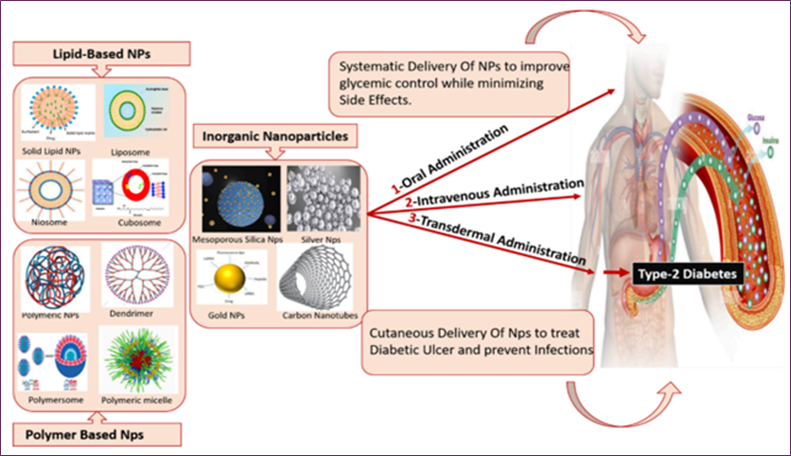
Figure 11: schematic diagram showing the detection of released insulin by using nanoparticles during diabetes diagnosis and monitoring (adopted from ref. [17])
Green Synthesis from Plants for Diabetes Treatment
Why is it Necessary?
The present scenario of Diabetes Mellitus (DM) is that it has turned into a chronic metabolic disease with life-threatening complications. A Survey of the International Diabetes Federation (IDF) shows that 90% of diabetic patients are diagnosed with type 2 diabetes (T2DM) [27,28]. The cost of health care associated with diabetes continues to grow, resulting in a huge economic burden for affected patients as well as countries.
Green Synthesis: The green synthesis method is used for natural materials such as plant extract [29]. For example, green synthesis of gold nanoparticles is the synthesis of gold nanoparticles using natural material extract in such a way that the natural material extracts will reduce Au+3 ions to Au0 [30]. The fact is, herbs and supplements can not cure diabetes completely and can not be a stand-alone treatment. However, some combined with conventional treatment may relieve diabetic symptoms and reduce the risk of complications. For example: Neem, Turmeric, Fenugreek, ginger, etc (see Table 2). The extract of neem leaf could improve the overall glycemic control parameters and lipid profile, and also no reports of severe adverse events. This means the above results suggest that neem extract may be an effective and safe therapeutic option for individuals with T2DM. Although there is a lot of room for green synthesis nanoparticles using herbs and plants, here we will discuss the “neem extract” for T2DM treatment.
Table 2 : Properties of nanoparticles and composition of neem leaf extract
|
Herbs, Plant Extract |
Nano-particles |
Observed Results |
References |
|
Neem extract |
Au/Ag, spherical, 29-92 nm |
Nanoparticles are very effective against Gram-negative and Gram-positive bacteria |
[31] |
|
Neem Gum |
Au, spherical, 50-250 nm Ag, spherical, 30-60 nm |
Both gold and silver nanoparticles have a wide range of antimicrobial activity against human pathogens |
[32] |
|
Composition of Neem extract
C ZnO Na Al Si S K |
ZnO nanoparticle synthesized from neem leaf extract (wt %) 43.56 52.00 1.51 1.50 0.16 0.51 0.92 |
|
|
Investigation [33] shows that type 1 and type 2 diabetes alike often face sudden sugar spikes, and use of “neem juice” offers an important relief for diabetes because of its quick-acting properties. This means neem juice has the potential for a quick diabetes remedy. In addition, neem (Azadirachta Indica) juice’s property what has been observed in Ayurveda, are:
- Blood purifying qualities that gently assist metabolic balance
- containing blood glucose-modulating compounds which are capable to reduce post prandial sugar surges
- Its anti-oxidant and anti-inflammatory properties offer beneficial support to liver and pancreas wellness
“Neem juice” doses for effective and safe use for handling the sudden sugar surges are: 5 ml or 1 teaspoonful of neem juice in 50 ml water (figure 12) [34].

Figure 12: Shows neem juice, extracted from fresh neem leaf, mixed with water (Courtesy: Apollo Pharmacy)
Conclusion
Quantum mechanics deals with the behavior of particles at the microscopic scale, which has long been seen as unrelated to classical biological systems like cell dynamics. The discovery of quantum tunneling and nanoparticles offers growing interest in quantum biology towards investigating the quantum effects in cell biology, their role in the digestive system, enzymes, and insulin related to sugar levels in bloodstreams. Nanotechnology offers the ability to describe the manipulation of matter on an atomic, molecular, and supramolecular/ nanolevel scale where unique quantum mechanical effects take place. This means that the reduction of at least one dimension at the nanoscale (1-100 nm) involves the design, production, characterization, and application of various nanoscale materials in different potential areas where nanoparticles exhibit a series of excellent properties in comparison to their bulk structures. The reason is that the nanomaterials become more dependent on their shape, size, and interfaces. Thus, the use of nanomaterials and nanodevices in the field of health and medicine in diabetes treatment. At present, diabetes has become a chronic disease, and healthcare is becoming more and more expensive. As an alternate / substiture, green synthesis nanomaterials from herbs and plants turn into a substitute medicine that is less cost-effective compared to chemical medicine. Natural environment can be considered as an open mine of herbs, plants, and trees which are easily available. For example, neem, aloe vera, tulsi, turmeric, ginzer etc., which have potential for treating as green synthesis materials. Almost all of these provide gold (Au) or silver (Ag) nanomaterials in spherical shapes. Among them, “neem extract” and neem gum, aloevera offer Au / Ag nanoparticles having spherical shapes with sizes (29-92) nm, (50-60) and (5-50) nm, respectively. Especially, neem extract possesses a special characteristic that it is capable of tackling the sudden sugar spikes as observed in type1 and type 2 diabetes. Thus, fresh neem leaf juice/extract exhibits its magical role when it is consumed for quick support during sugar spikes.
It is suggested that “neem extract” can be used in clinical trials for blood sugar management to better understand diabetes.
Acknowledgement: The author wishes to thank Prof. H N K Sarma, Dept. of Physics, Manipur University, B K Ganguly, Mrs. TapatiParui and specially to RajarshiParui for his help in computer work.
Author Contribution: I have done the manuscript.
Conflict of Interest: The author does not have any conflict of interest.
Data Availability: Data sharing is not applicable as no data sets were analyzed.
Funding Source: No Funding
Ethics Statement: Not applicable
- Ghalioungui P. (1987). The Ebers papyrus A new English translation, commentaries and glossaries, Cairo, Academic Scientific Research and Technology.
- Peermery J J. (1987). Historie Illustree de diabete de l”Antiquite a nos jours, Paris Les Editions Roger Dacosta.
- Kavamanou M, Protogerou A, Tsoucalas G. (2016). Milestones in the history of Diabetes Mellitus. The main contributors. World J. Diabetes. 7(1): 1-7.
- Porler E. (2018). History of Diabetes. Healthline.
- Schrodinger E. (1924). Quantisierung als Eigenwertproblem. Anal. Phys. 382, 361.
- Mandelstam L, Leontowitsch, M. (1928). "Zur Theorie der Schrödingerschen Gleichung". Zeitschrift für Physik. 47:131–136.
- Merzbacher E. (2002). "The Early History of Quantum Tunneling". Physics Today. 55: 44–49.
- Niazi S K. (2025). The Quantum Paradox in Pharmaceutical Science: Understanding without comprehending – A Cenbtennial Reflectio . Int. J. Mol. Sci. 26(10): 4658.
- Wick P, Malek A, Manser P. (2010). Nanoparticle transport across the placental barrier. Environ. Health Perspect. 118: 432 – 436.
- Newman D K, Kolter R. (2000). A role for excreted quinones in extracellular electron transfer. Nature. 405: 94–97.
- Chance B, Hess B. (1959). Metabolic control mechanisms I. Electron transfer in the mammalian cell. J. Biol. Chem. 234(9): 2404–2412.
- Weiss M, Steiner D F, Philip L H. (2014). Insulin Biosynthesis, secretion structure and structure-Activity, Relationship. Endotext.
- Yousaf T, Ahmad I, Younas Z. (2025). Emerging plantbased Nanotechnological advances and molecular insights for T2DM, Diagnosis and treatments—Recent trends and Future Prospect. ACS Omega. 10(32): 35310-35326.
- Zhang B, Cao Y, Qu Z. (2025). The impact of metformin on mortality in patients with type 2 diabetes. Endocrine. 87(1): 136-143.
- Rysz J, Franczyk B, Redek M. (2021). Diabetes and cardiovascular risk I renal transplant patients. Int. J. Mol. Sci. 22(7): 3422.
- Gao Z, Huang L, Jiang Z. (2025). Effects of different hypoglycaemic drugs on beta-cell function in T2DM. Asystematic review. Euro. J. Med. Res. 30(1): 121.
- Simos Y V, Spyrou K, Palila M. (2021). Trends of Nanotechnology in type 2diabetes mellitus treatment. Asian J. Pharma. Sci. 16(1): 62 – 76.
- Andreadi A, Lodeserto P, F Todaro. (2024). Nanomedicine in the treatment of diabetes. Int. J. Mol. Sci. 25(13): 7028.
- Turner R. (1998). Effect of intensive blood glucose control with metformin on complications in overweight patient with type 2 diabetes (UKPDS34). Lancet. 352(9131): 854 – 865.
- Thule P M, Umpierrez G. (2014). Sulfonylureas: a new look at old therapy. Curr. Diab. Rep. 14(4): 473.
- Soccio R E, Chen E R, Lazar M A. (2014). Thiazolidinediones and the promise of insulin sensitization in type 2diabetes. Cell Metab. 20(4): 573 – 591.
- Hansen K B, Vilsboll T, Knop F K. (2010). Incretin mimetics : a novel review. Diabetes Metab. Syndr. Obes. 3: 155-163.
- Dicker D. (2011). DPP4 inhibitors impact on glycemic control and cardiovascular risk factors. Diabetes Care 34(2): 276-278.
- Singh M, Kumar A. (2018). Risks associated with SGLT2 inhibitors: an overview. Curr. Drug Saf. 13(2): 84-91.
- Wang X, Sun H, Mu T. (2024). Materials and Structure of Polysaccharide-Based Delivery Carriers for Oral Insulin: A Review. Carbohydr. Polym. 323: 121364.
- Wu W, Zhou S. (2013). Responsive Materials for Self- R Egulated Insulin Delivery. Macromol. Biosci. 13(11): 1464–1477.
- Brownlee M, Cerami A. (1979). A Glucose-Controlled Insulin-Delivery System: Semisynthetic Insulin Bound to Lectin. Science. 206(4423): 1190–1191.
- International Diabetes Federation. (2025). Facts & Figures about diabetes. IDF Diabetes Atlas, 11th Edition.
- R Goyael. (2025). Type 2 Diabetes. StatePearls.
- Bharadwaj K K, Rabha B, Pati S, Sarkar T. (2021). Green synthesis of gold nanoparticles using plant extract as beneficial prospect for cancer theranostics. Molecules. 26(21): 6389.
- Aljabali A A, Akkam Y, Al Zoubi M S. (2018). Synthesis of Gold Nanoparticles Using Leaf Extract of Ziziphus zizyphus and their Antimicrobial Activity. Nanomaterials (Basel). 8(3): 174.
- T. C. Prathna, N. Chandrasekaran, M. Raichur Ashok and A. Mukherjee, Colloids Surf, B. (2011). 82(1): 152-159.
- P. Velusamy, J. Das, R. Pachaiappan, B. Vaseeharan and K. Pandian, Ind. Crops Prod. (2015). 66: 103-109.
- Chand K, Abro M I, Aftab U. (2019). Green synthesis characterization and antimicrobial activity against staphylococcus aureus of silver nanoparticles using extracts of neem, onion and tomato. RSC Advances. 9: 17002-17015.
- Apollo Pharmacy. Best Ayurvedic neem juice for tackling sudden sugar spikes. (06th July 2025).
Download Provisional PDF Here
PDF